
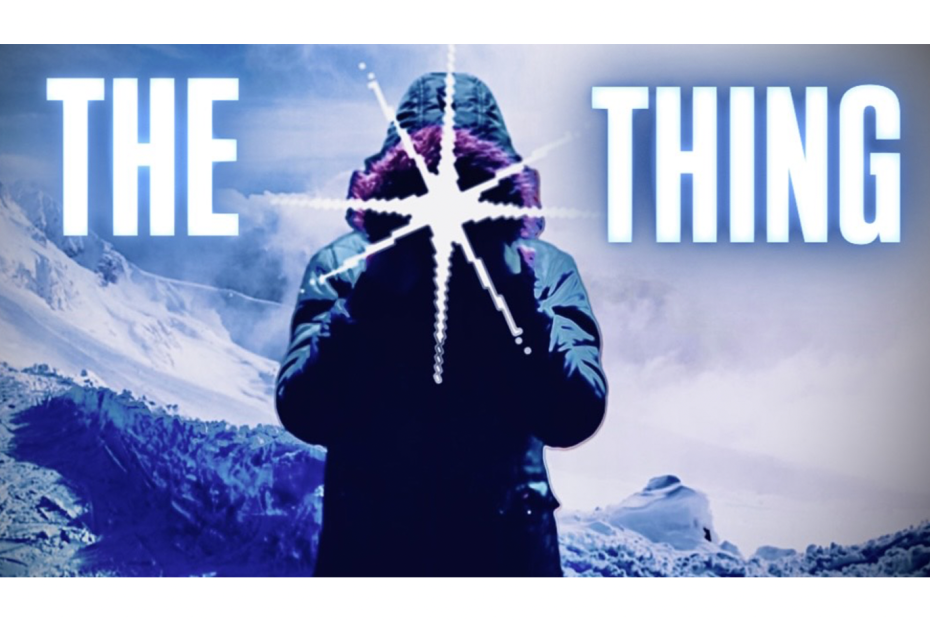
Every year, the National Film Registry adds up to 25 films to include in their preservation. It’s a historic and national designation, arguably more notable than an Oscar (for an American film, at least), as being inducted into the NFR shows a merit for a film’s cultural contribution, historic relevancy, and American cinematic significance. There is a ten year minimum for a film to be released publicly before being eligible to be nominated or submitted, and while some films still hope to achieve such inclusion, John Carpenter‘s The Thing can now count itself among the high caliber.
Speaking on the release of the 2025 National Film Registry last month, Acting Librarian of Congress Robert R. Newlen said, “When we preserve films, we preserve American culture for generations to come. These selections for the National Film Registry show us that films are instrumental in capturing important parts of our nation’s story”.
Other notable films added in the new registry this year cover a large span of both genres and decades; contemporary classics like The Incredibles and Inception, lauded 90’s hits such as The Truman Show and Philadelphia, other integral 80’s flicks such as Glory and The Karate Kid, and beloved pictures from “The Golden Age” of Hollywood like White Christmas and Sparrows starring silver screen legends Bing Crosby and Mary Pickford.
Long before it became one of the most revered horror films ever made, The Thing existed as a difficult, shape-shifting project in languishing in development hell. The source material, John W. Campbell Jr.’s 1938 novella Who Goes There?, had already been adapted in the 1950’s with The Thing from Another World, where a more traditional monster movie reduced the alien to a humanoid threat (that fire stunt effect, however, is still incredible to watch). By the 1970s, producers David Foster and Lawrence Turman sought a more faithful, paranoia-driven adaptation that leaned into the story’s central terror.


Bitemares Halloween Demon Teeth
Multiple filmmakers circled the project, each bringing a different interpretation, before John Carpenter was hired in the late 1970s following the success of Halloween and Escape from New York. Carpenter, working with screenwriter Bill Lancaster, reshaped the material into something colder and far more existential. Lancaster’s script emphasized isolation, male camaraderie unraveling under pressure, and the creeping dread of assimilation, rather than a conventional external monster narrative. Universal Pictures initially approached the film cautiously, setting a modest budget before realizing the scale required to bring the creature to life. By the time cameras rolled, the production had ballooned to roughly $15 million, a significant investment for a horror film in the early 80’s.
The defining creative decision of The Thing came through special makeup effects artist Rob Bottin, a prodigy in his early twenties who had previously worked with Carpenter on The Fog. Bottin pushed the concept of the alien far beyond a single identifiable form. Instead, he proposed a constantly mutating organism that absorbed and imitated life, resulting in grotesque, ever-changing configurations of flesh.


This idea radically expanded the scope of the film. What had once been a contained creature feature became a showcase of transformation, body horror, and biological chaos. Carpenter embraced the concept immediately, recognizing that it would distinguish the film from its predecessors and contemporaries. The effects quickly became the centerpiece of the production. What began as a comparatively modest allocation grew into a massive undertaking, eventually consuming around $1.5 million of the budget, an enormous figure for practical effects at the time. Bottin assembled a team of artists, sculptors, and mechanical technicians to bring the creature to life using rubber, animatronics, chemicals, and organic materials, creating textures that felt disturbingly real.


Principal photography began in August 1981 and lasted roughly twelve weeks, split between location work in Alaska and studio shoots at Universal. The production created a unique visual contradiction: while exterior scenes captured the vast, isolating whiteness of the Arctic, interior sets were artificially chilled to near-freezing temperatures to maintain breath visibility and realism. Carpenter’s directing style on set was efficient and disciplined. He insisted on two weeks of rehearsal before shooting, resulting in a tightly controlled shoot, even as the technical demands of the effects threatened to overwhelm the schedule. Cinematographer Dean Cundey used anamorphic lenses and carefully composed negative space to suggest unseen threats lurking just outside the frame. The camera frequently holds on empty space, allowing paranoia to fill the gaps.
The creature effects sequences were often the most complex elements to film. Some required dozens of operators to manipulate puppets, while others involved elaborate mechanical rigs and flammable materials. In one case, a large-scale creature effect required nearly fifty people to operate simultaneously. Bottin’s commitment bordered on self-destruction. He worked continuously for over a year on the film, often sleeping on set, and ultimately hospitalized himself from exhaustion by the end of production. His work, however, defined the film’s identity. Each transformation, from the kennel sequence to the infamous “chest chomp” and spider-head, was executed with a tactile realism that still unsettles audiences decades later.


In post-production, Carpenter refined the film’s pacing into something deliberately oppressive. Scenes linger, conversations stretch, and suspicion builds without relief. The final edit by Todd Ramsay avoids the rapid cutting jump scare trope common in modern horror films today, favoring a slow burn that takes the viewer on the ride with the crew without lingering too long for anyone to check their phone or watch for the time. The score, composed by the legend Ennio Morricone, delivered a minimalist, pulse-driven soundtrack that echoed Carpenter’s own musical sensibilities, reinforcing the film’s sense of dread through restraint, as a simple, echoing drum track functions as the heartbeat of the picture, but not quite human in its analog dissonance.
When The Thing premiered on June 25, 1982, it entered a cinematic landscape fundamentally at odds with its tone. Audiences were gravitating toward optimism in science fiction, driven largely by the success of E.T. the Extra-Terrestrial, released just weeks earlier. Carpenter’s film offered the opposite: nihilism, distrust, and an ending devoid of comfort. This was also the 80’s: excess and feel good stories were the big ticket, and films like Raiders of the Lost Ark, Return of the Jedi, and Ghostbusters were the sort of popcorn pictures getting audiences in seats for science fiction, action, and comedy.


The response was harsh. Critics dismissed the film as excessively grotesque, and audiences largely stayed away. It earned just under $20 million domestically against its sizable budget, placing it far from a hit. Carpenter later reflected the film’s bleak worldview contributed heavily to its rejection, particularly during a period when audiences sought escapism. His standing within the studio system took a hit, and the film was widely regarded at the time as a failure.
Fortunately, time has been extraordinarily kind to The Thing. Through home video, cable broadcasts, and critical reassessment, the film slowly found its audience. What was once criticized as excessive became celebrated as groundbreaking. The practical effects, initially seen as grotesque, are now regarded as one of the greatest achievements in horror filmmaking. Its themes of paranoia and identity have only grown more relevant, particularly in the wake of the 2020 pandemic, allowing it to resonate across even today’s youngest of generations. Its influence can now be seen in countless films, from body horror to sci-fi thrillers, and its commitment to practical effects remains a benchmark rarely met in today’s contemporaries.
✯ You Might Also Like ✯
Glam Punk Wig Styling Tutorial
Today, we are excited to show you how to take your aesthetic to the next level with ou…

Setting Your Makeup – The Only Guide You’ll Need
When talking about makeup, setting powder is essential. For everyday wear or fun costu…

How to do Makeup for The Creature from Guillermo del Toro’s ‘Frankenstein’
Back with another makeup tutorial! This time we’re focusing on how you can do yo…